6 Oct 2026
Tracing Cryptographic Verification Layers for Timed Bonus Unlocks in Mobile Slot Platforms
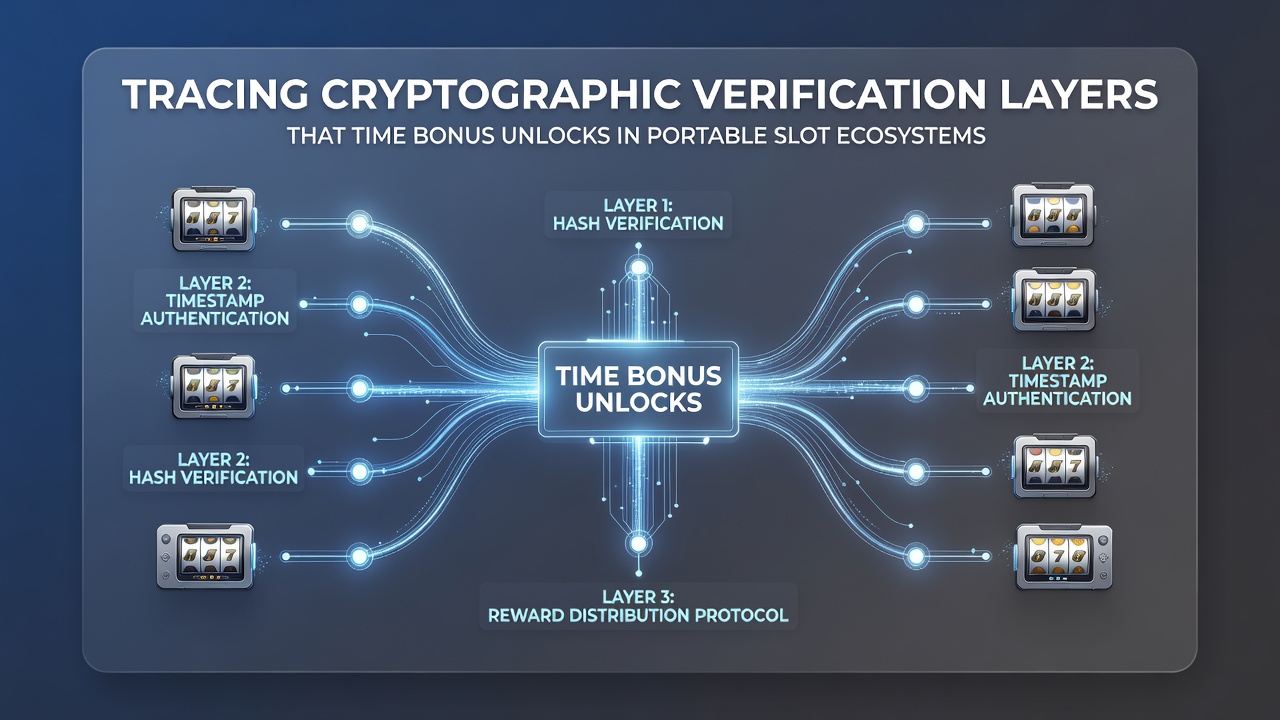
Portable slot ecosystems rely on layered cryptographic systems to manage the precise timing of bonus unlocks, and these mechanisms combine hash-based timestamping with digital signatures that prevent premature or unauthorized access to rewards. Developers embed verification protocols directly into mobile applications so that bonus triggers activate only after servers confirm elapsed time through chained cryptographic proofs. Data from regulatory filings shows these layers have expanded rapidly since 2024 as operators scale handheld gaming across multiple jurisdictions.
Core Components of Verification Layers
Each layer starts with a client-side nonce generation that pairs with server-issued certificates, and together they form a time-locked sequence that mobile devices must validate before releasing bonus features. Researchers at technical institutes have documented how elliptic curve cryptography secures the initial handshake while Merkle trees organize subsequent timestamp proofs into verifiable chains. Operators integrate these elements so that bonus timing remains consistent even when network latency fluctuates across regions.
Hardware security modules on user devices store private keys that sign time-stamped requests, and remote attestation protocols allow servers to confirm the integrity of those modules before any unlock occurs. Studies indicate that this combination reduces replay attacks by binding each bonus event to a unique cryptographic state that expires once the reward window closes. Observers note that portable platforms have adopted these methods to meet varying compliance standards without altering core game logic.
Timing Mechanisms and Bonus Synchronization
Bonus unlocks depend on synchronized clocks between client applications and centralized verification servers, and protocols such as Network Time Protocol with cryptographic extensions help maintain accuracy within milliseconds. When a player reaches a required play threshold, the app submits a signed packet containing cumulative session data, and the server responds with a release token only if the embedded timestamps align with pre-defined intervals. This process ensures rewards do not activate ahead of schedule even if users attempt to manipulate device clocks.

Multi-factor checks occur at each stage, including proof-of-work elements that require minimal device computation yet add resistance against automated timing exploits. Industry reports reveal that platforms handling high volumes of concurrent sessions have shifted toward hybrid models where edge servers perform initial verifications before forwarding results to core ledgers. Such architectures support the rapid scaling observed in October 2026 deployments across North American and Asian markets.
Regulatory Alignment and Implementation Patterns
Regulators in multiple jurisdictions require documented audit trails for every cryptographic verification step, and operators submit logs that detail how time-bound bonus tokens were issued and redeemed. The New Jersey Division of Gaming Enforcement maintains public guidelines that outline acceptable methods for securing reward timing in mobile environments. Similar frameworks appear in other regions, where authorities emphasize verifiable delay functions that mathematically enforce minimum elapsed times before unlocks become possible.
One documented case involved a major platform that integrated zero-knowledge proofs to demonstrate compliance without exposing underlying session data, and this approach allowed independent auditors to confirm timing integrity across thousands of daily bonus events. Those implementations reduced manual review workloads while preserving the confidentiality of player activity patterns. Data from industry associations shows adoption rates for such advanced layers increased steadily through 2025 and into 2026.
Future Directions in Cryptographic Timing Controls
Engineers continue refining post-quantum cryptographic primitives that could replace current signature schemes as computational threats evolve, and early tests indicate these updates can integrate into existing mobile slot frameworks without disrupting bonus timing accuracy. Portable ecosystems now test threshold signature systems that distribute verification authority across multiple nodes, reducing single points of failure during peak usage periods. Academic papers indexed on IEEE Xplore detail how these distributed models maintain sub-second response times while upholding strict temporal constraints on reward releases.
Conclusion
Cryptographic verification layers have become foundational to secure bonus timing within portable slot ecosystems, combining established techniques with emerging protocols to meet both technical and regulatory demands. The layered approach ensures that time-based rewards activate only under verified conditions, supporting consistent player experiences across diverse network environments. Continued refinement of these systems will likely shape mobile gaming infrastructure for years ahead as operators balance security requirements with performance expectations.